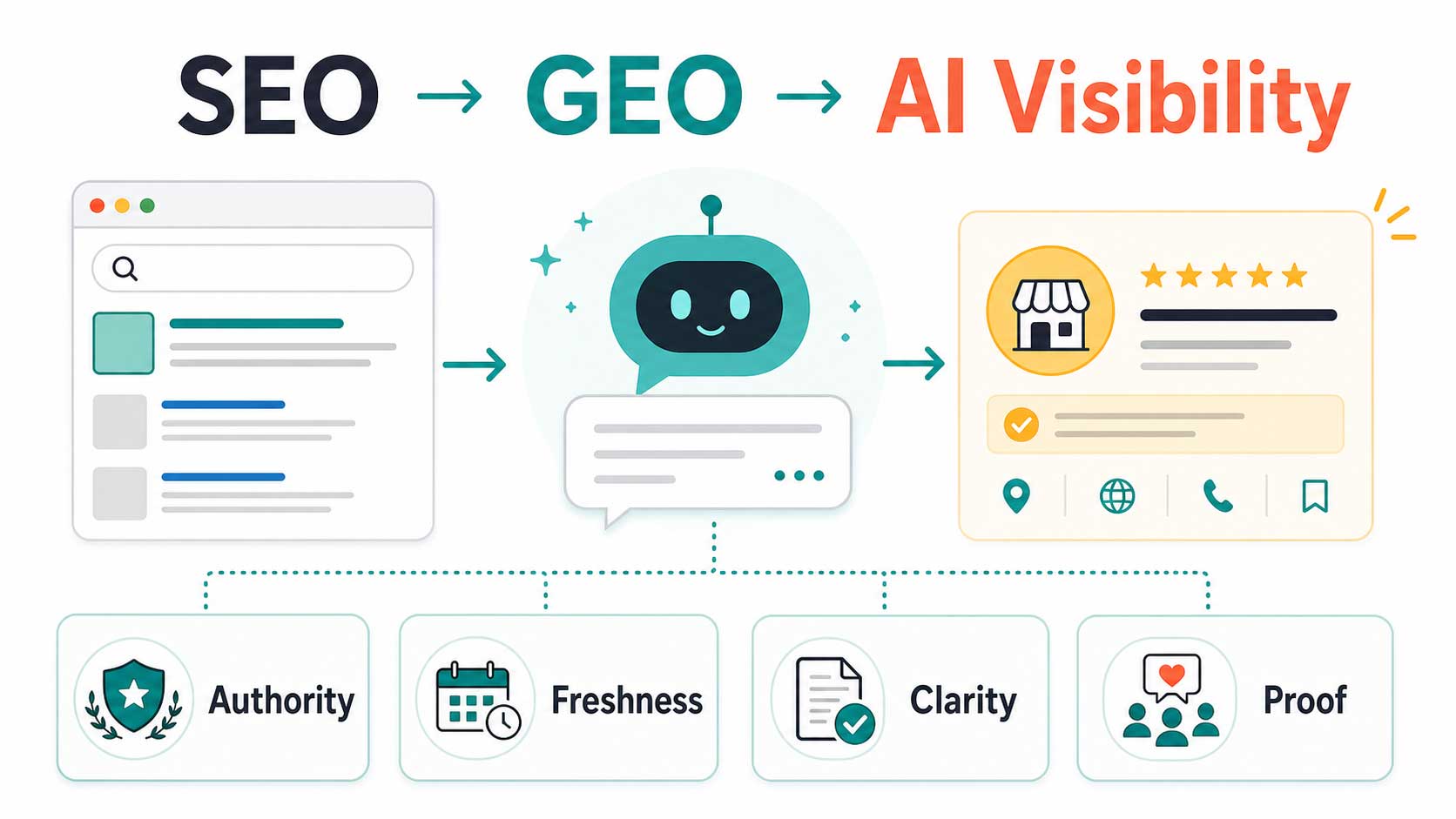
If I were teaching this to a junior SEO, I would start with this: SEO is no longer only about ranking on Google. It is now also about being understood, trusted and recommended by AI tools like ChatGPT, Perplexity, Gemini and Google AI Overviews.
That is where GEO comes in. GEO stands for Generative Engine Optimisation. It means improving your brand’s visibility inside AI-generated answers, not just traditional search results.
The Simple Shift: From Search Results To AI Answers
In the old search journey, someone typed a query into Google, scanned the results, clicked a few websites, compared options and made a decision.
In the new search journey, many users ask an AI tool a full question, such as: “Who is the best plumber near me for blocked drains?” or “Which accounting firm is best for small businesses in Sydney?” The AI then gives a short list of recommendations.
That means the user may never visit ten websites. They may only trust the answer given by the AI.
Why This Matters
This is not a small trend. Google says AI Overviews are available in more than 200 countries and over 40 languages. SparkToro’s 2024 zero-click study found that 58.5% of US Google searches ended without a click. Bain & Company also reported that many consumers now rely on AI summaries and zero-click results regularly.
So the lesson for a junior SEO is simple: traffic is not the only metric anymore. Visibility inside AI answers is becoming a serious part of digital marketing.
What Is GEO?
GEO, or Generative Engine Optimisation, is the process of making your business easier for AI systems to understand, trust, cite and recommend.
Traditional SEO asks: “Can this page rank?” GEO asks: “Can an AI confidently recommend this business as a trusted answer?”
SEO Vs GEO: What Is The Difference?
| SEO | GEO |
|---|---|
| Focuses on Google rankings | Focuses on AI recommendations |
| Optimises website pages | Optimises your wider online presence |
| Tracks clicks and traffic | Tracks mentions, citations and AI visibility |
| Backlinks are a major signal | Brand mentions, reviews and third-party proof matter heavily |
The Four Signals AI Looks For
1. Authority
AI wants to know whether other trusted sources mention you. This includes industry websites, directories, news articles, podcasts, guest posts, forums and client websites.
If your business only exists on your own website, AI has limited proof that others trust you.
2. Freshness
AI systems favour current information. A website last updated two years ago looks less reliable than one with recent content, new reviews, updated service pages and active social profiles.
Freshness does not mean publishing every day. It means showing consistent signs that the business is active.
3. Clarity
AI needs to clearly understand who you are, what you do, where you operate and who you help.
For example, “We help businesses grow” is too vague. “We help local plumbing companies in Melbourne generate blocked drain leads through SEO and Google Business Profile optimisation” is much clearer.
4. Proof
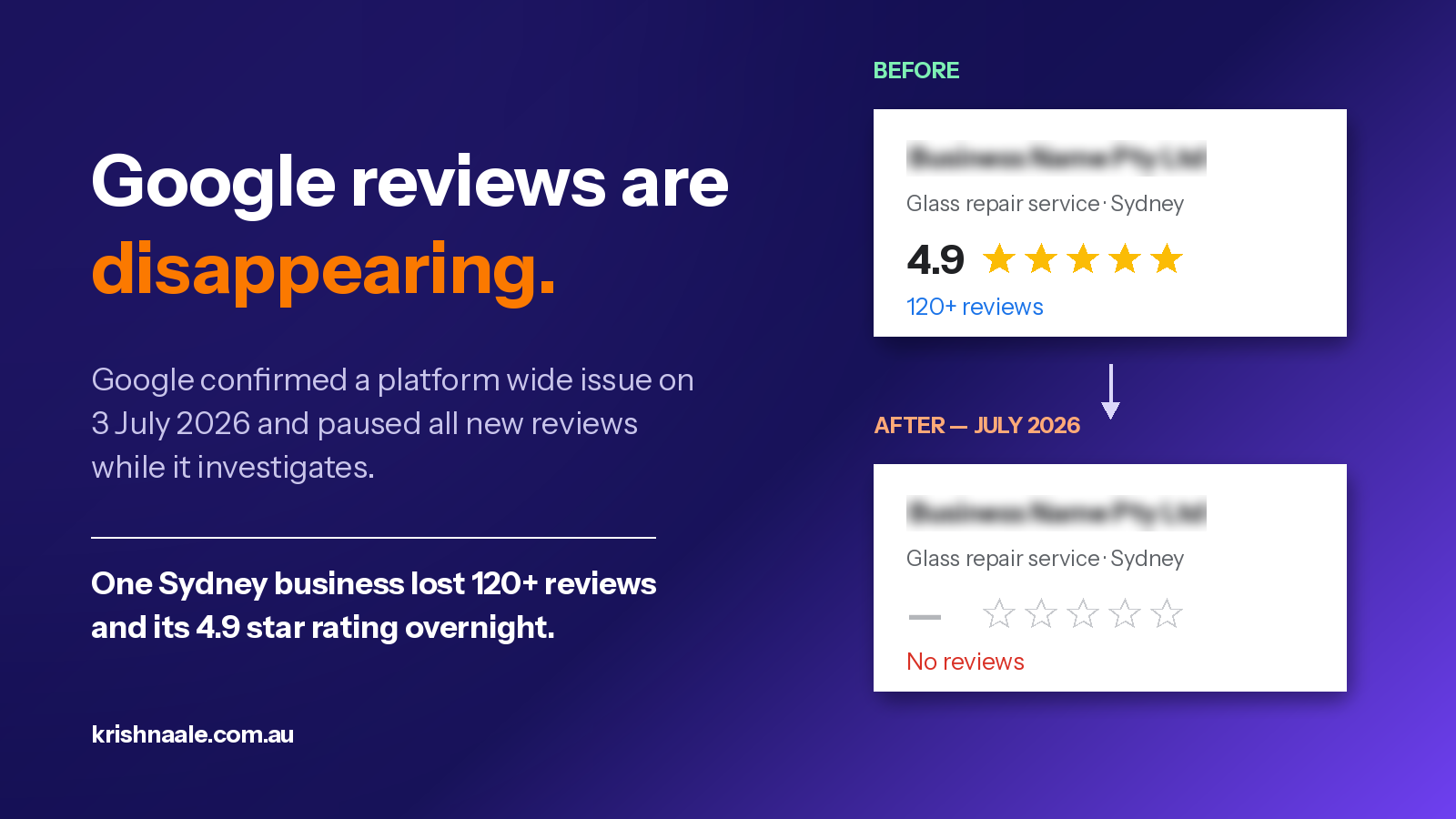
Proof includes reviews, testimonials, case studies, ratings and real customer feedback. AI uses these signals to understand whether people actually trust the business.
This is why review velocity matters. A steady flow of recent reviews is stronger than a large number of old reviews with no recent activity.
How To Audit A Business For GEO
If I gave this task to a junior SEO, I would ask them to do this simple audit:
- Search the brand name in ChatGPT and Perplexity.
- Ask: “Who are the best [service] businesses in [location]?”
- Check whether the business appears in the answer.
- Check whether competitors appear instead.
- Search the business name on Google and review third-party mentions.
- Check Google Business Profile, directories, reviews and social profiles for consistency.
- Look for outdated pages, old statistics and missing schema markup.
What Businesses Should Do First
Step 1: Fix Entity Clarity
Make the business name, address, phone number, website URL and description consistent everywhere. This includes Google Business Profile, Bing Places, Apple Maps, Facebook, LinkedIn, directories and industry listings.
Step 2: Write A Clear Business Description
Create one canonical description that explains what the business does, who it helps, where it operates and why it is credible.
Example:
Example Plumbing is a Melbourne-based plumbing company specialising in blocked drains, emergency plumbing and CCTV drain inspections. The team works with homeowners, landlords and small businesses that need fast, licensed plumbing support. Example Plumbing is known for same-day service, upfront pricing and practical repair advice. The business has served Melbourne customers since 2012.
Step 3: Publish Helpful Content
Write content that answers real customer questions directly. AI is more likely to use content that is clear, specific and easy to extract.
Good content topics include:
- How much does this service cost?
- What causes this problem?
- How do I choose the right provider?
- What is the difference between option A and option B?
- When should I call a professional?
Step 4: Build Third-Party Mentions
Do not rely only on your own website. Try to earn mentions from local directories, industry blogs, suppliers, partners, podcasts, newsletters and client case studies.
A mention does not always need to be a backlink. If a credible website names your business in the right context, that can still help AI understand your authority.
Step 5: Keep Reviews Moving
Ask happy clients for reviews every month. Respond to every review. Turn strong testimonials into case studies. Spread reviews across relevant platforms instead of relying only on one place.
A Simple Monthly GEO Checklist
- Publish one useful article, guide, FAQ or case study.
- Update one old page with fresh information.
- Post once per week on the main social platform.
- Ask two customers for reviews.
- Respond to all new reviews.
- Earn or request one third-party mention.
- Check ChatGPT and Perplexity visibility once per month.
The Biggest Mistake To Avoid
The biggest mistake is treating GEO like a trick. It is not about stuffing keywords into content for AI. It is about making the business genuinely easier to verify.
AI needs clear information, recent activity, trusted mentions and real proof. If those signals are missing, even a good business can be invisible.
Final Takeaway
SEO is not dead. But SEO by itself is no longer enough.
The businesses that win in AI search will be the ones that are clearly described, consistently listed, actively reviewed, regularly updated and mentioned by credible third parties.
If you are teaching a junior SEO, teach them this simple rule: Google rankings show where a page sits. GEO shows whether AI trusts the business enough to recommend it.
If you are reviewing how your website appears across Google and AI search, my SEO service can help you prioritise the right improvements. You can also start with a free SEO audit to identify the main opportunities.